



From Cloth to Ready-to-Wear Fashion: Developing the “Pagi Sore” Blouse Pattern
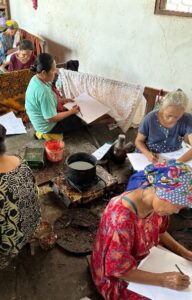 Batik Lasem artisans have long struggled to visualize how their hand-drawn fabrics—especially pagi sore cloths with two different motifs on the left and right sides—can be turned into modern garments. This challenge often limits production to jarik (long cloths), reducing opportunities for product diversification and market expansion. Buyers frequently ask how such fabric can be made into a top, but without patternmaking skills, artisans hesitate to cut the cloth for fear the motifs will look unbalanced or lose harmony. To address this, a community development program was carried out with Pembatikan Pesona Canting in Karas Kepoh Village, Lasem. Since 2023, the mentoring has introduced artisans to motif development, patternmaking, and ready-to-wear design, giving them tools to transform batik fabric into wearable pieces without compromising motif integrity. The motif development process combined Design Thinking and Participatory Rural Appraisal (PRA). Artisans were actively involved in observing local inspiration sources, sketching motifs, refining designs, and producing new batik using these concepts. The facilitator acted as a guide, ensuring artisans were not passive recipients but co-creators of the design, encouraging sustainable and community-driven innovation.
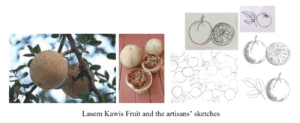
One highlighted motif was inspired by the kawis fruit (Limonia acidissima), a rare fruit iconic to Lasem. Its organic shape was transformed into flowing curves suitable for batik. The resulting Kawis Fruit Pagi Sore jarik (1 × 2 meters) features vine-like arrangements, “watu pecah/kricak” backgrounds, and kenikir flower accents.
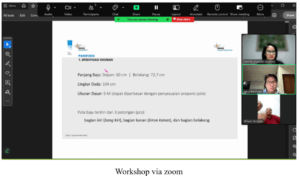
A major breakthrough of the mentoring program was the creation of the Pola Baju Atasan Pagi Sore. This community initiative is part of a multidisciplinary project involving Grasheli Andhini, BA(Hons)., MA. from the Fashion Design Program, School of Design and Dr. Dra. Vera Jenny Basiroen, M.F.A from Graphic Design New Media, School of Computing and Creative Arts, who collaboratively integrate visual design, fashion development, and cultural craftsmanship into a unified applied project. This pattern was designed to help artisans understand how fabric layout, cutting direction, and motif alignment work together when making a garment. Artisans learned that in batik, motifs are not just decorative—they represent identity, culture, and values, especially in Batik Lasem, where colors and patterns carry deep meaning. By showing that traditional motifs can be preserved while producing modern silhouettes, the Pagi Sore blouse pattern helps artisans move into ready-to-wear fashion, opening access to new consumers, especially younger audiences.
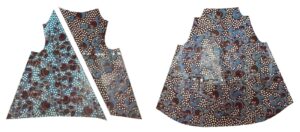
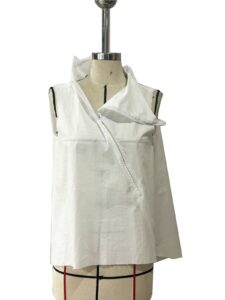
The pattern teaches artisans how to:
-
Align motifs so they remain continuous across seams
-
Plan fabric layout for pagi–sore cloths
-
Apply motifs as a central design element, not an afterthought
By bridging traditional craftsmanship with modern design practices, this collaboration creates new opportunities for Batik Lasem to evolve, adapt, and remain relevant in today’s fashion landscape. This initiative equips artisans with practical skills that expand their creative and commercial potential. With improved confidence in motif placement and garment construction, artisans can now explore ready-to-wear collections while maintaining Batik Lasem’s cultural depth. The program also supports long-term goals such as increasing market visibility, revitalizing local industries that declined after COVID-19, and preparing artisan-made products for exhibition in February 2026.


Comments :